










The Art of the Scene
Cinematic Challenges
By Dori Arazi
With God of War shipped and in the hands of our fans, I find myself contemplating the moments that helped define the new visual cinematic style we utilized for God of War. Each of these moments was a mental turning point, starting with “Can this be done with the tools we have?”, which moved onto “Can we pull this off without breaking our visual language?” and, mostly, ended with “I can’t believe we pulled this off.”
I’d like to share three of these moments, each of them defining a key cinematic milestone that paved the way moving forward.
Mother's Knife
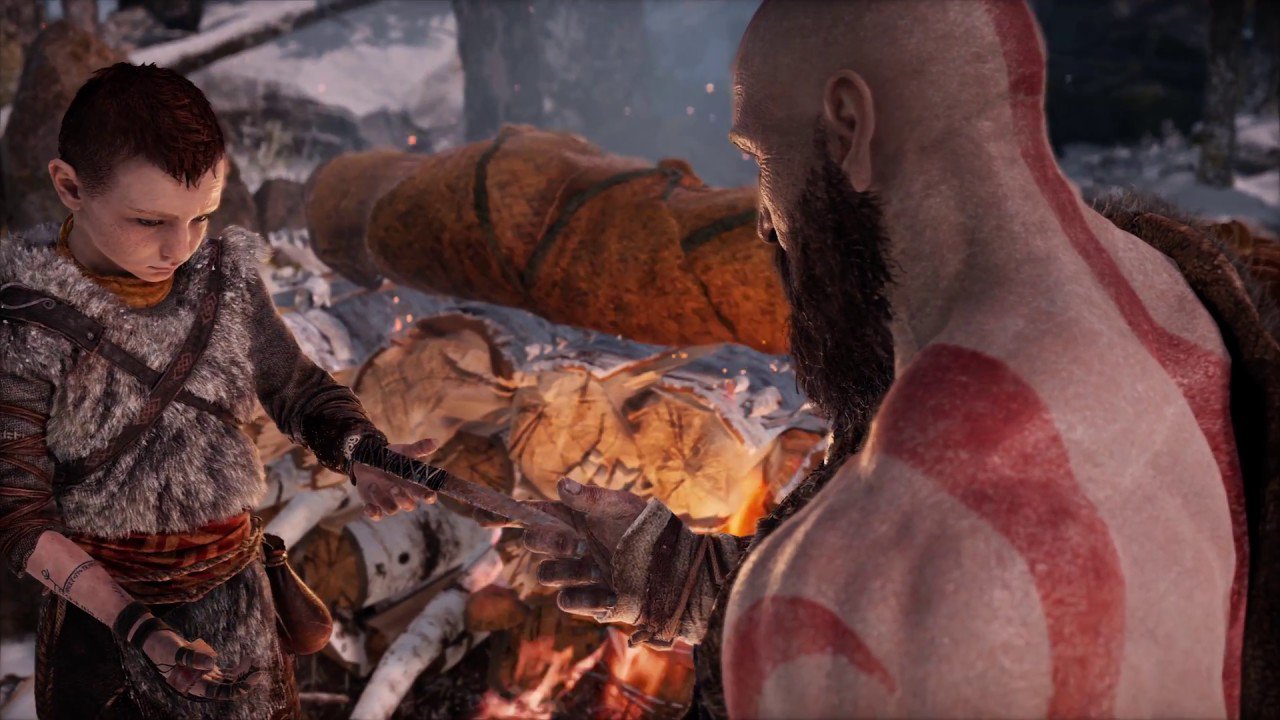
Cinematic Challenge: Can we use traditional cinematic/visual storytelling when the disciplines required are cross-departmental while we don’t cut the camera?
Reading the first draft of the script, this scene drew my attention. Even though it went through quite a bit of iteration in production, the crux of it always struck me as pivotal. This is the last scene we experience before our heroes start the first leg of their epic journey. Establishing core empathy fundamentals and key tension points was critical. If not, why would we care about this journey in the first place? Our writers (Matt Sophos and Rich Gaubert) did a great job setting up these fundamentals and I wanted to make sure the message was delivered subtly, but in a clear and evocative manner.
- What’s the relationship between Kratos and his son? How do they feel about each other?
- How do they feel about the loss of the mother?
- How does Kratos feel about being a single father?
I decided to use the blue, cold, harsh tones of the “outside” to represent Kratos, Kratos as a father (at least at that point in the story) and the dangerous journey they have ahead of them. We used this light in sharp, high contrast for punctuation. We then chose the soft warmth of the indoors to define the rare safety the mother provided, using that to portray the softer emotions.
The challenge was staging the acting and camera to play against these two moods and to help define the core relationships and personalities, all without cutting the camera. Compounding these challenges were the technological limitations of creating sophisticated lighting models for real time rendered scenes. Our lighter (Greg Montgomery) did an amazing job balancing these assets.
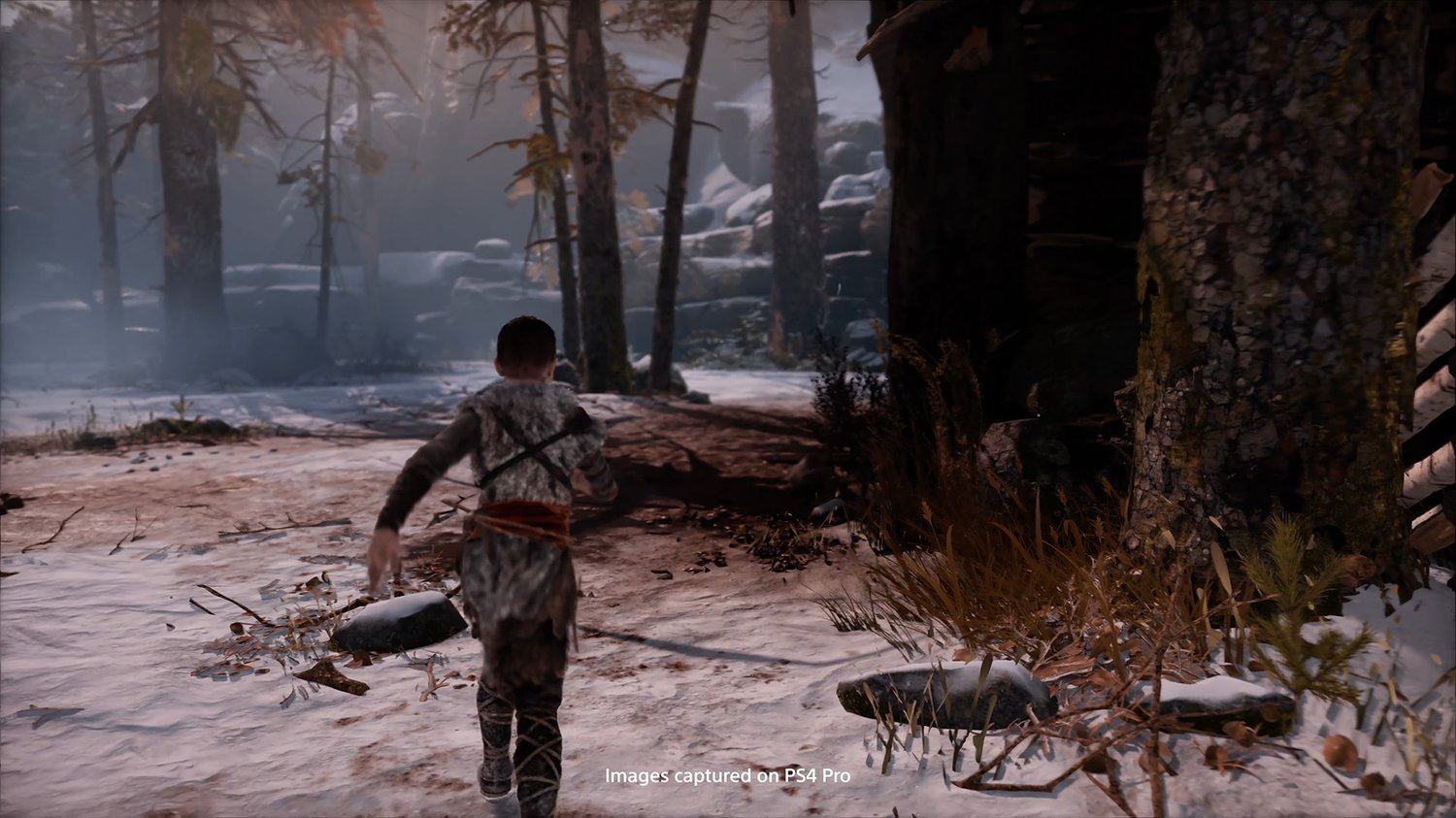
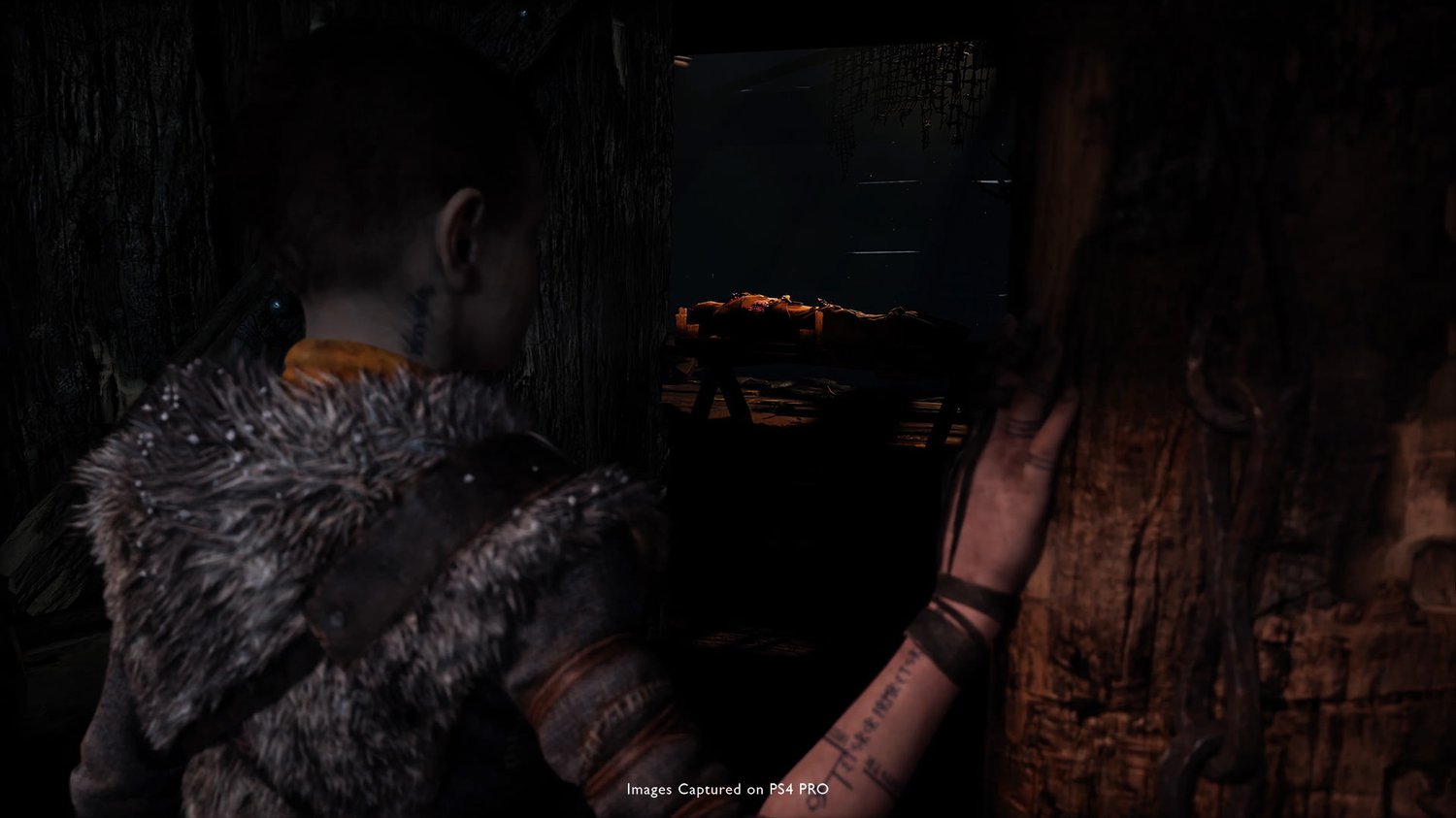
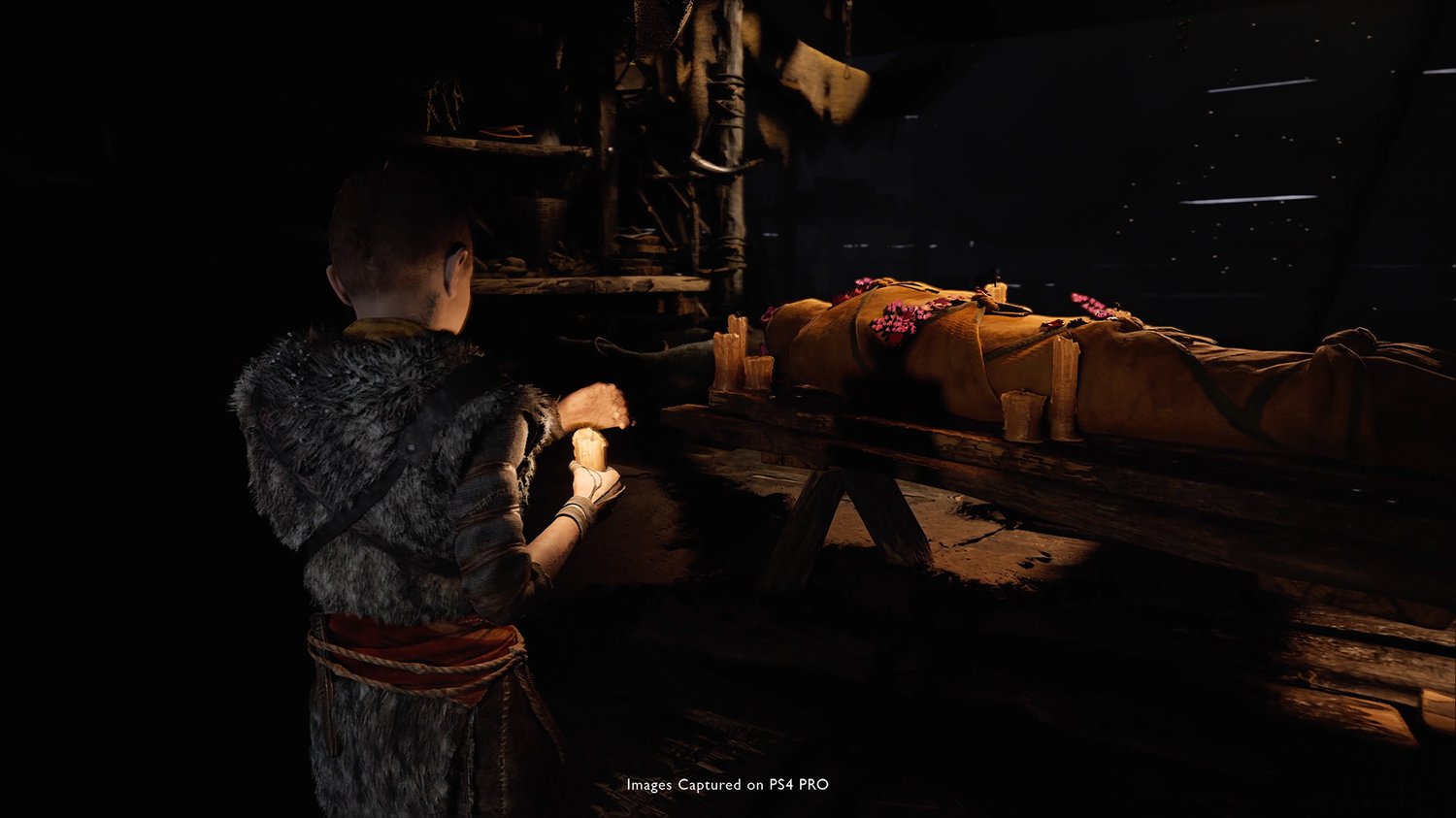
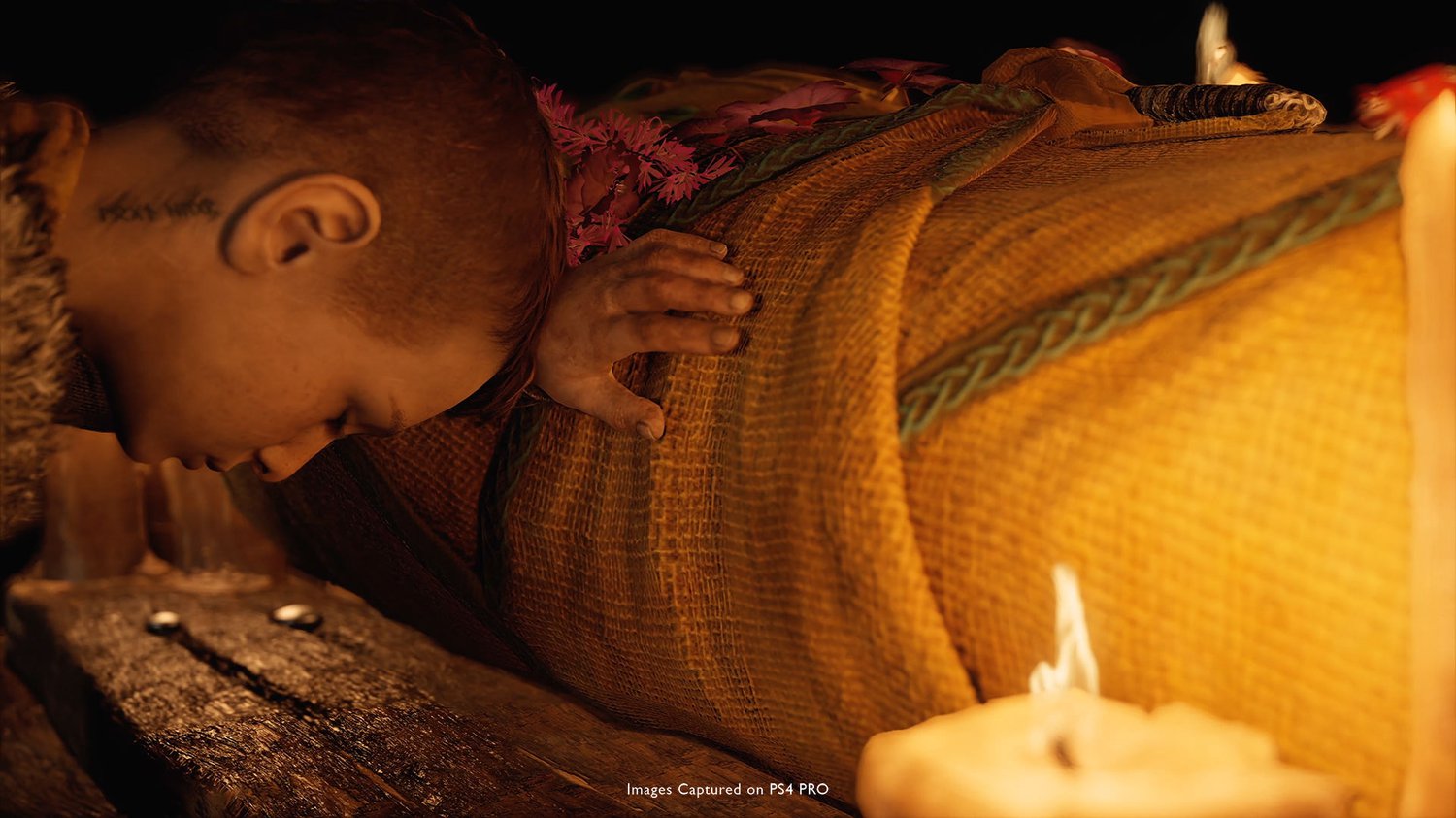
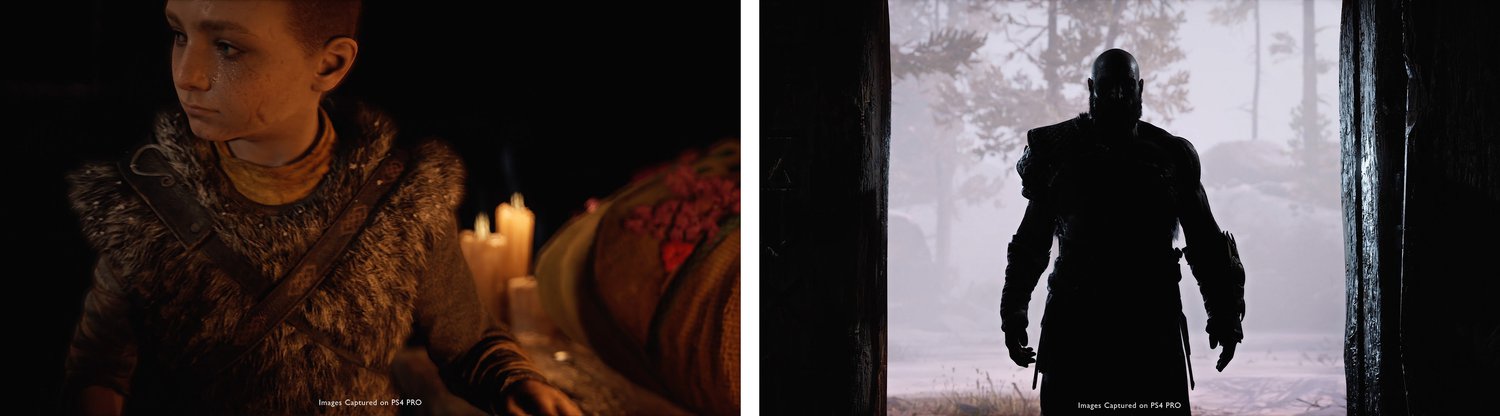
The challenge was staging the acting and camera to play against these two moods and to help define the core relationships and personalities, all without cutting the camera.”
-
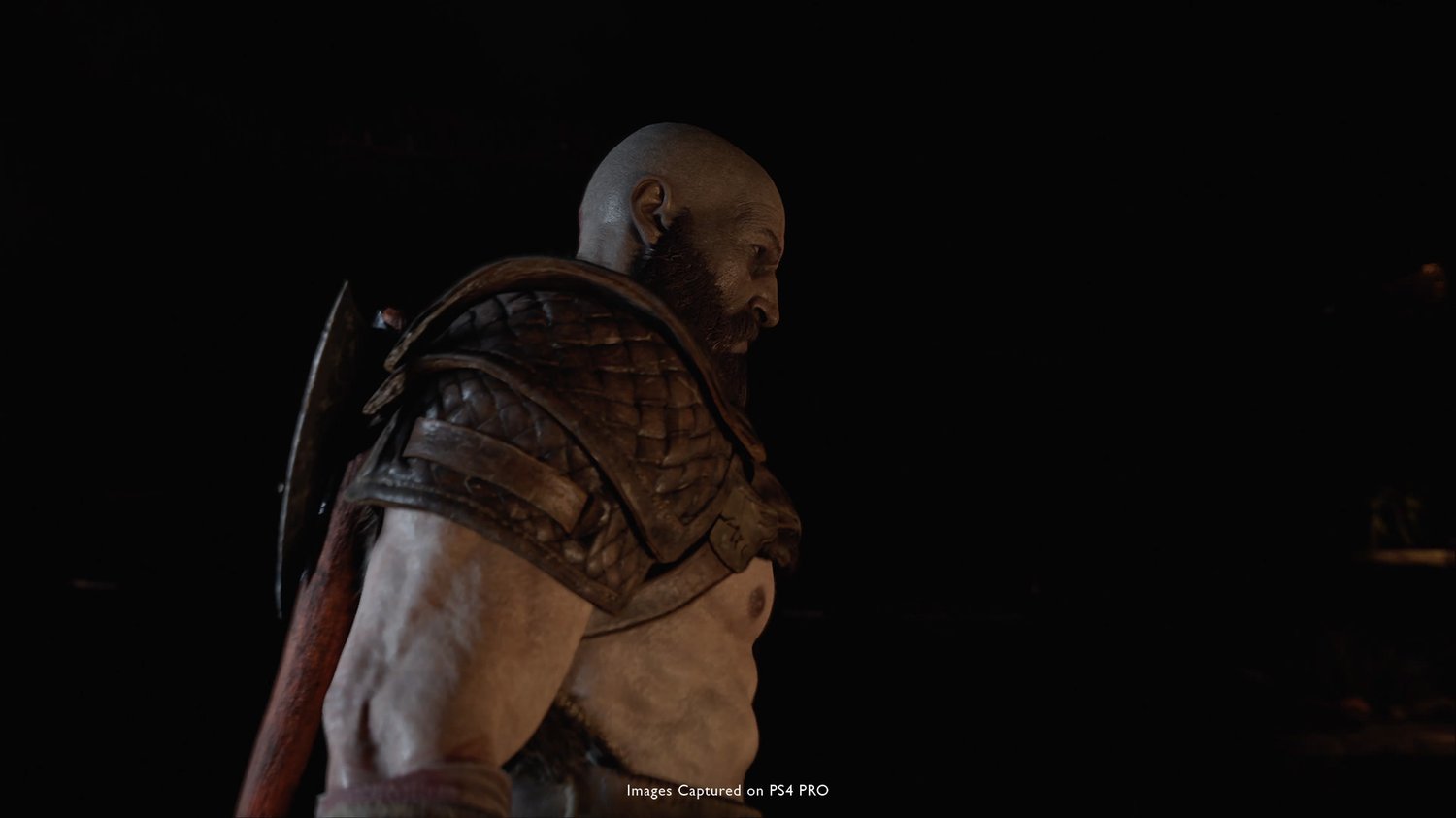
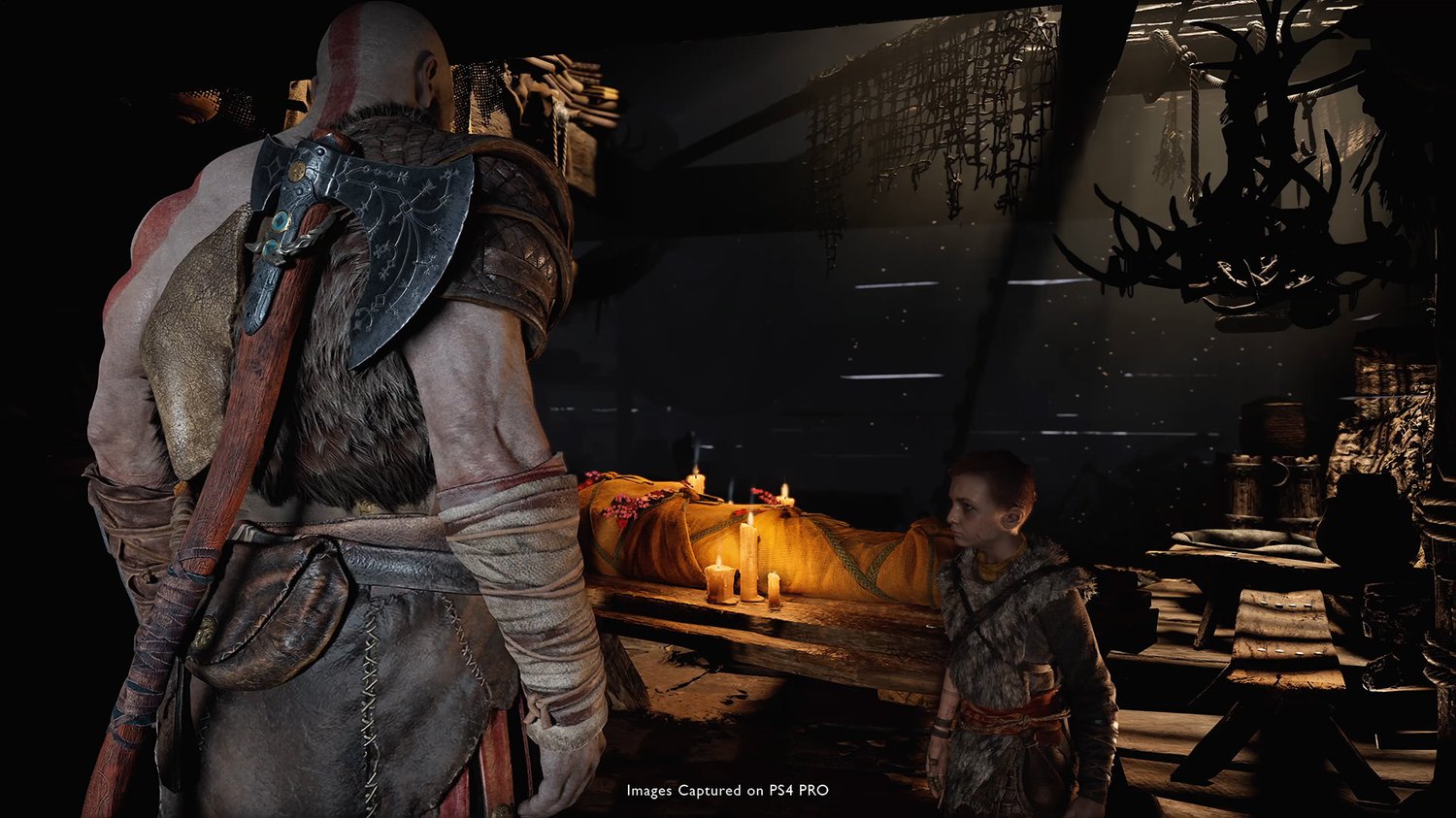
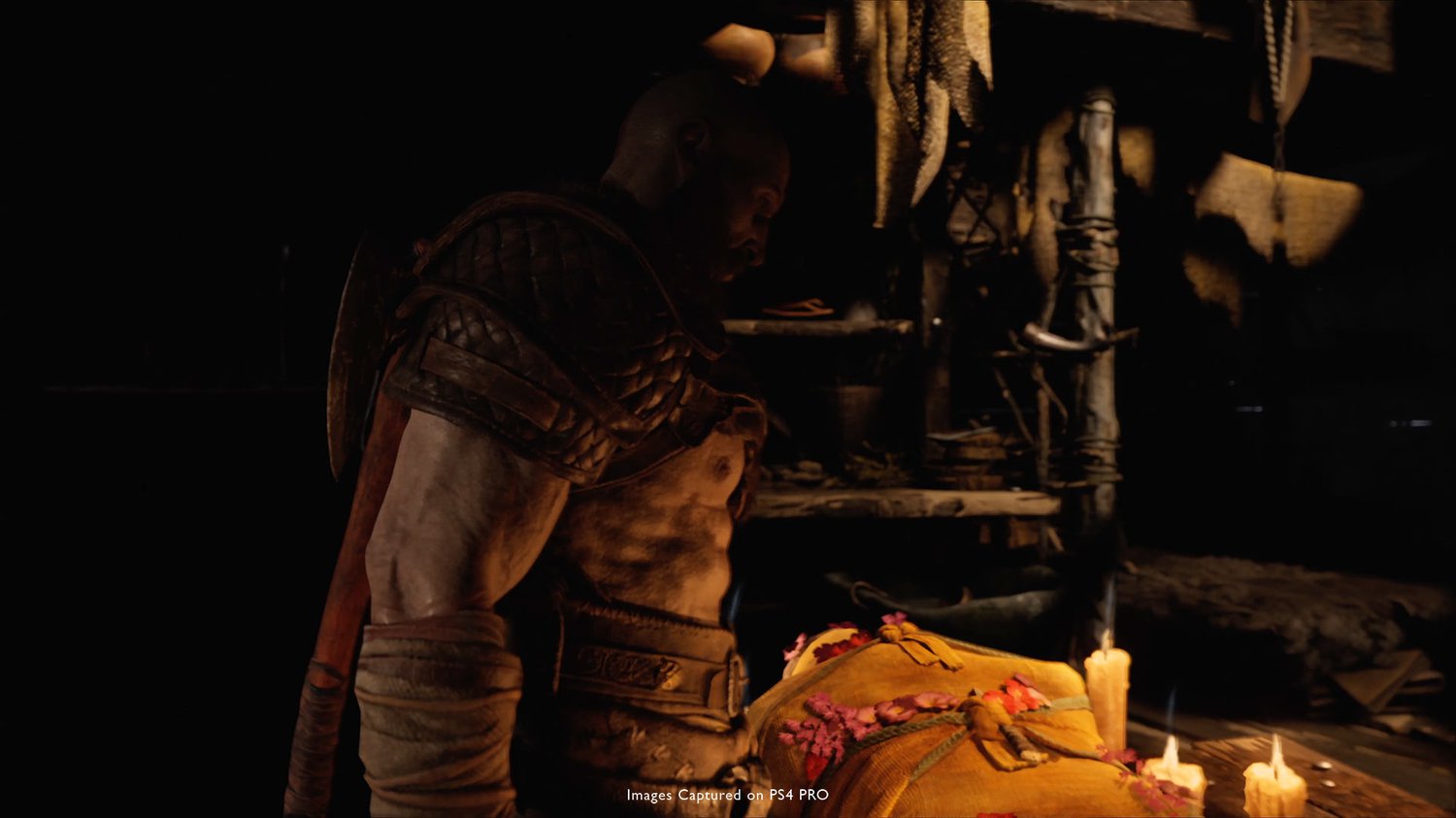
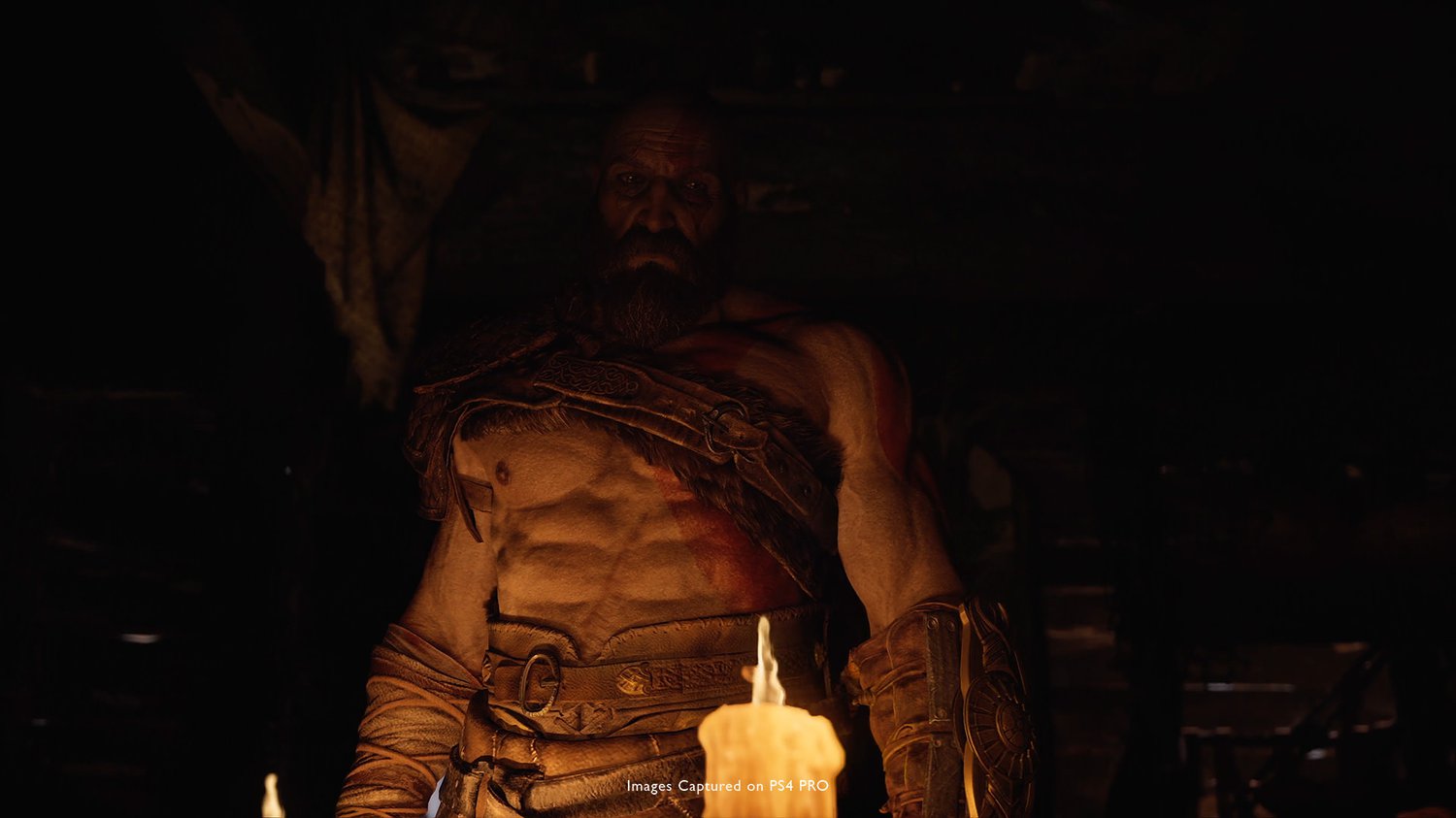
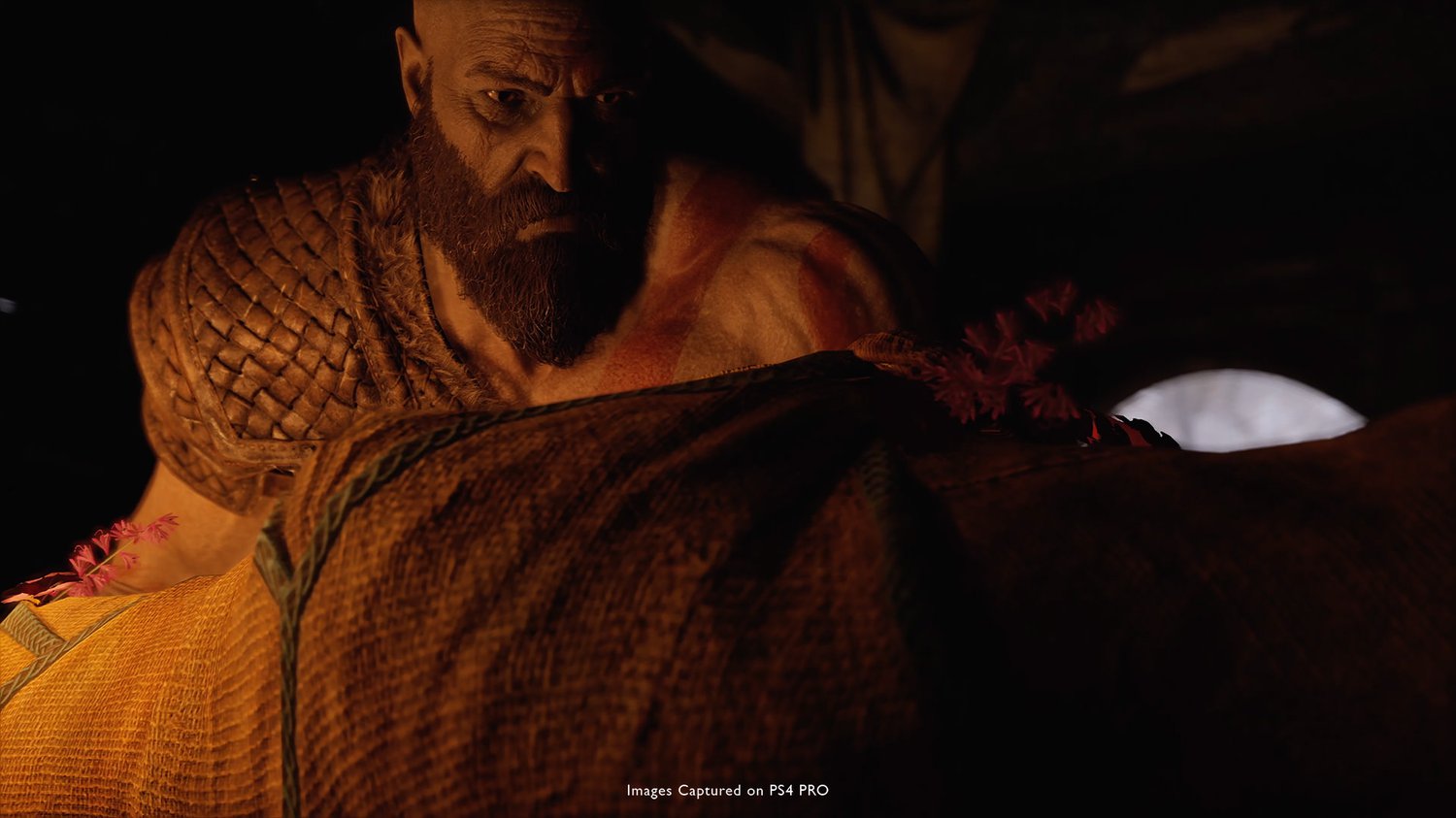
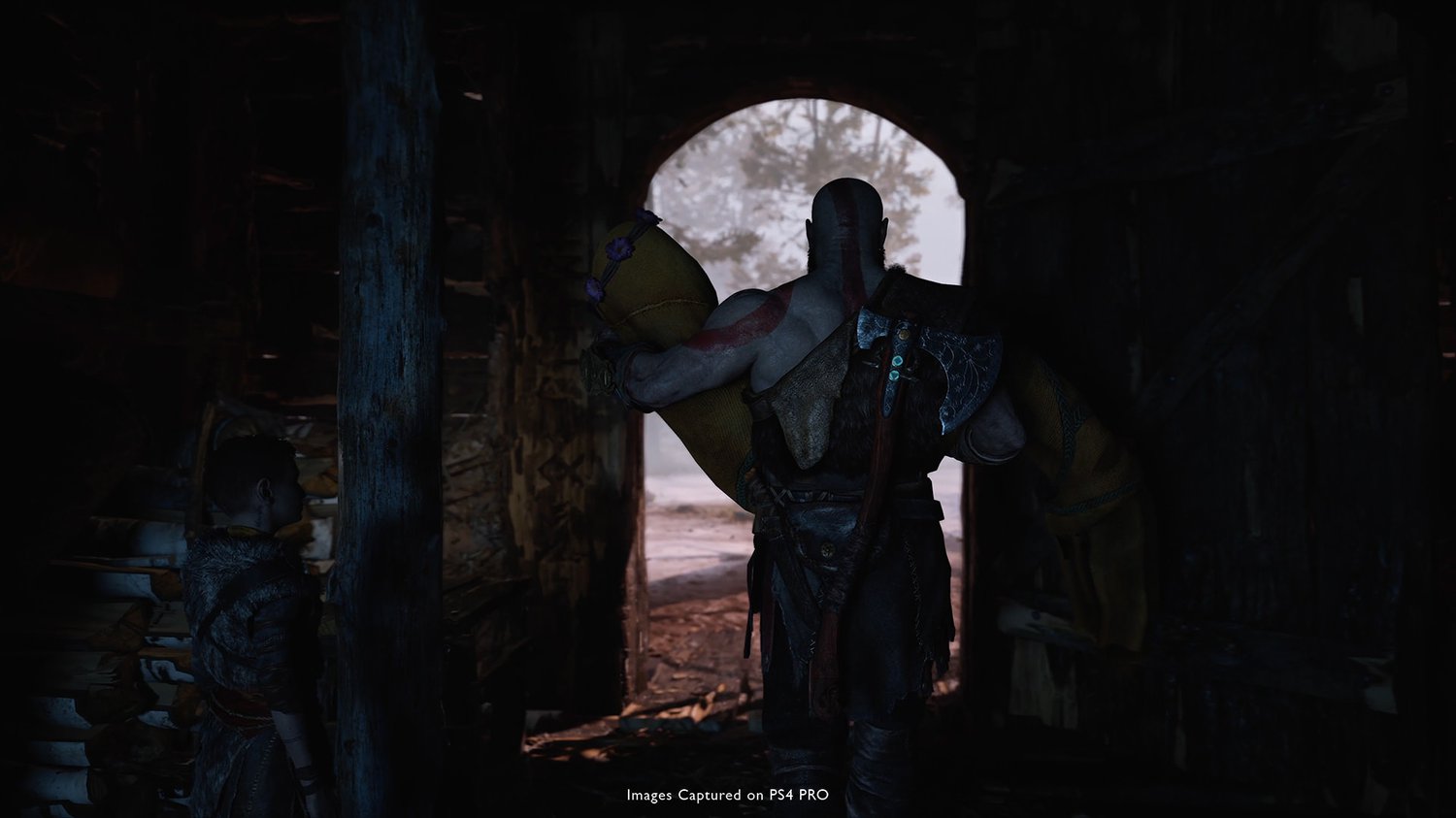
Two more beats resonated with me as I read the script for this scene. The lighting was strongly dictated by the environment at this point, so I chose to emphasize them in my framing and staging.
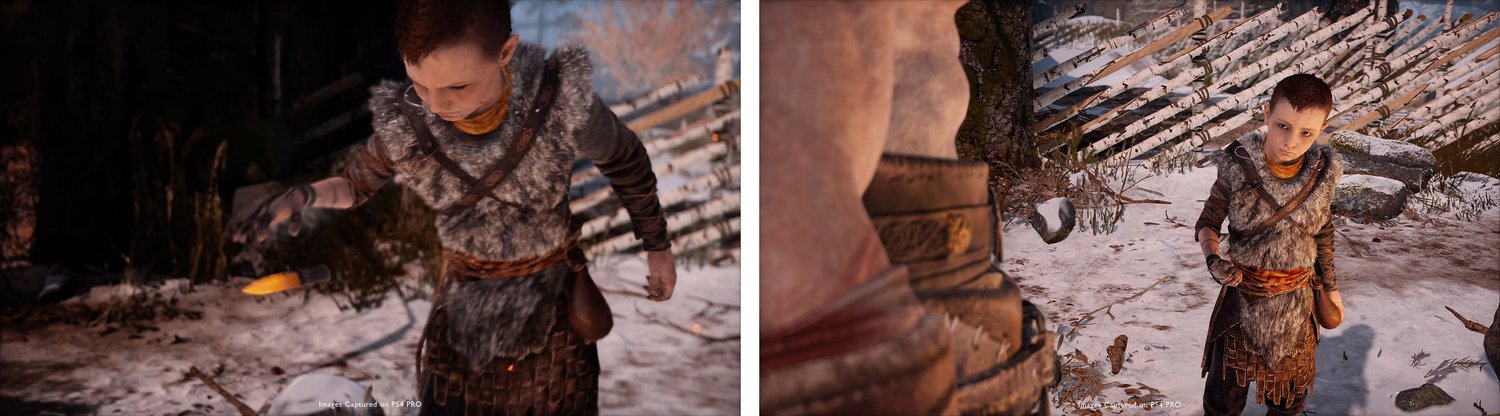
We’ve seen how deeply Kratos cares about Faye, and how bottled up he is about his emotions. The funeral pyre is obviously deeply important to him. Here comes Atreus with his childish attachments, ruining everything. With this setup, my next instinct was “Kratos is going to hand him his a**!” But, Kratos surprises us and leans down to take care of Atreus’ burned hand. Whether he is trying to be fatherly, or merely making sure he can still function as a warrior, we don’t know. But that contrast struck me when reading the script and I wanted to emphasize it.
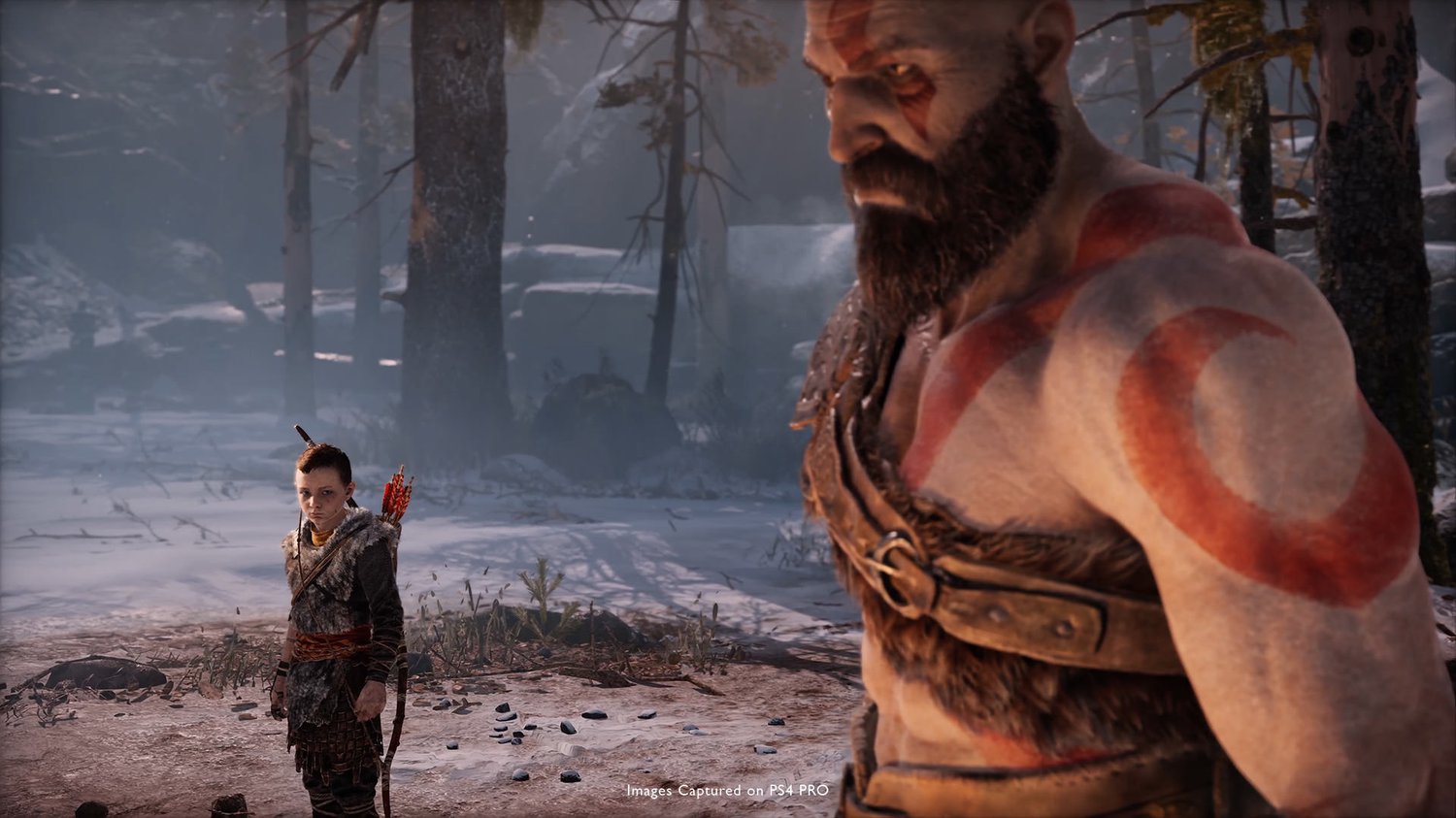
Kratos is struggling with both the emotion of losing Faye and not knowing how to be a father to Atreus. He pushes Atreus into a world he better understands (“We’re going hunting”), though he is still in deep pain over Faye’s loss. The very end of the scene gave the perfect opportunity to emphasize this conflic
Flying Boat Jump
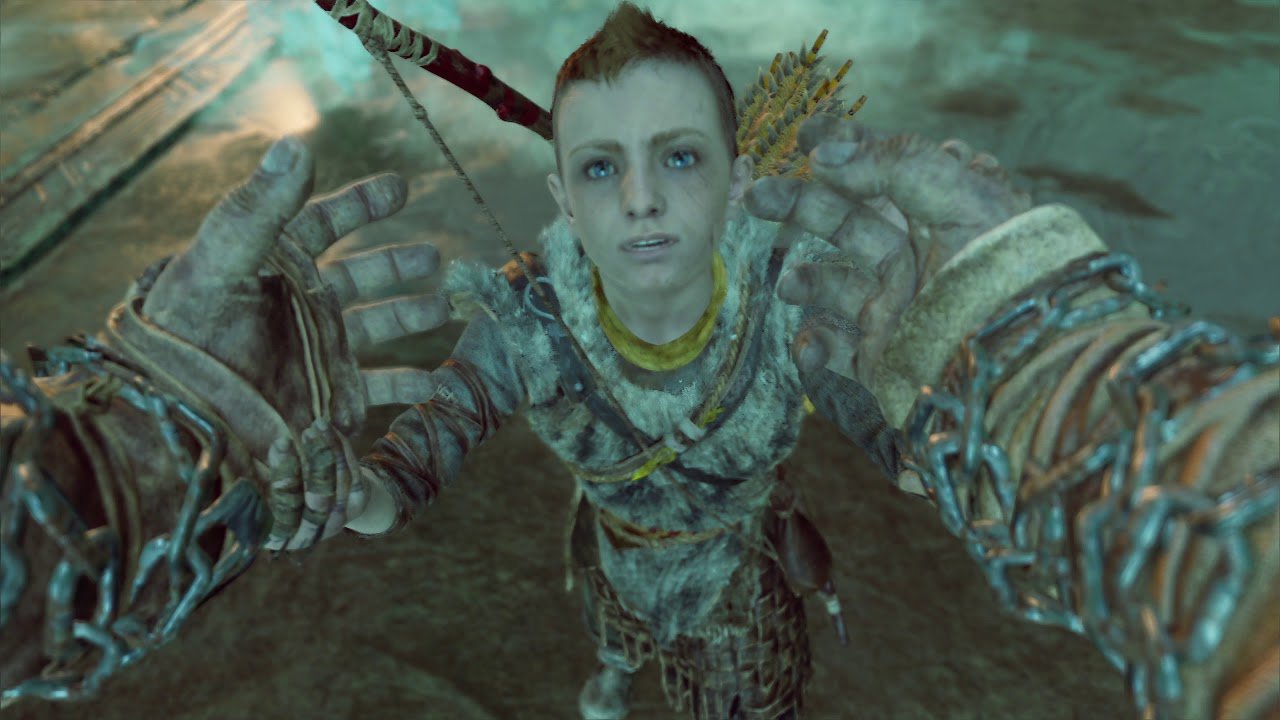
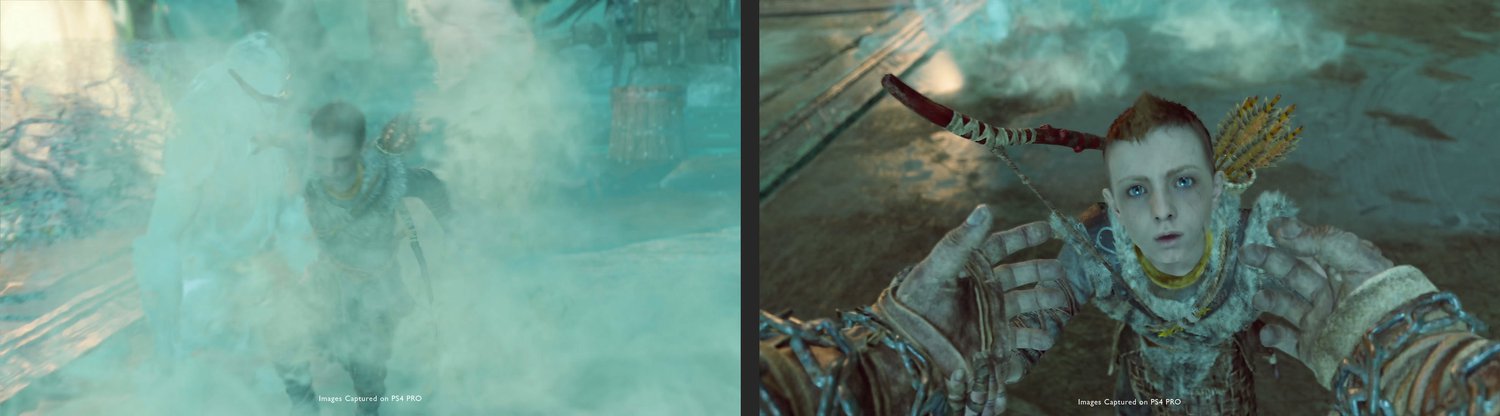
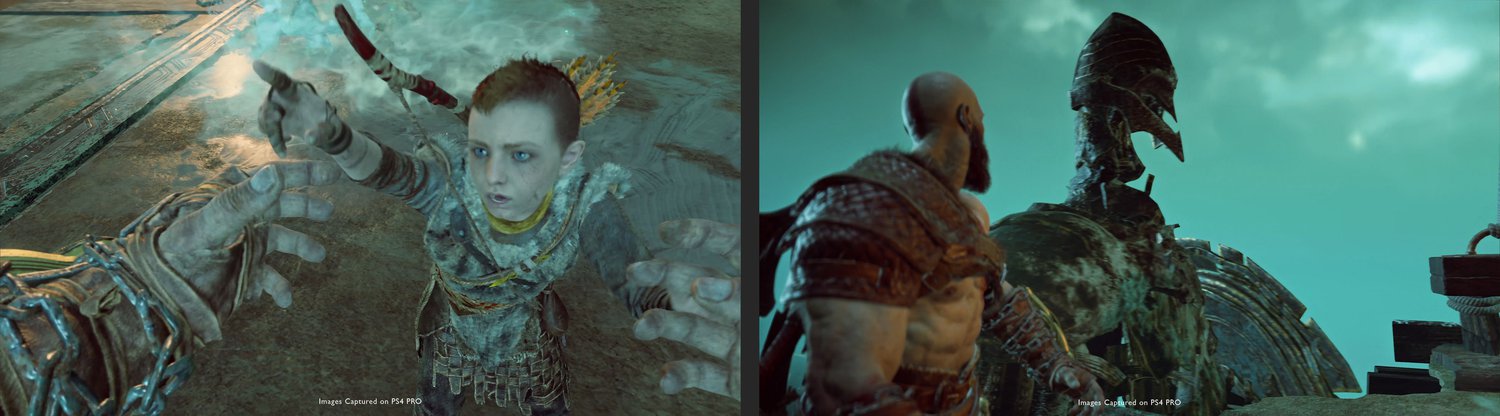
Cinematic Challenge: Changing point of view (from third to first and back) in order to push a sense of hallucination, while promoting empathy.
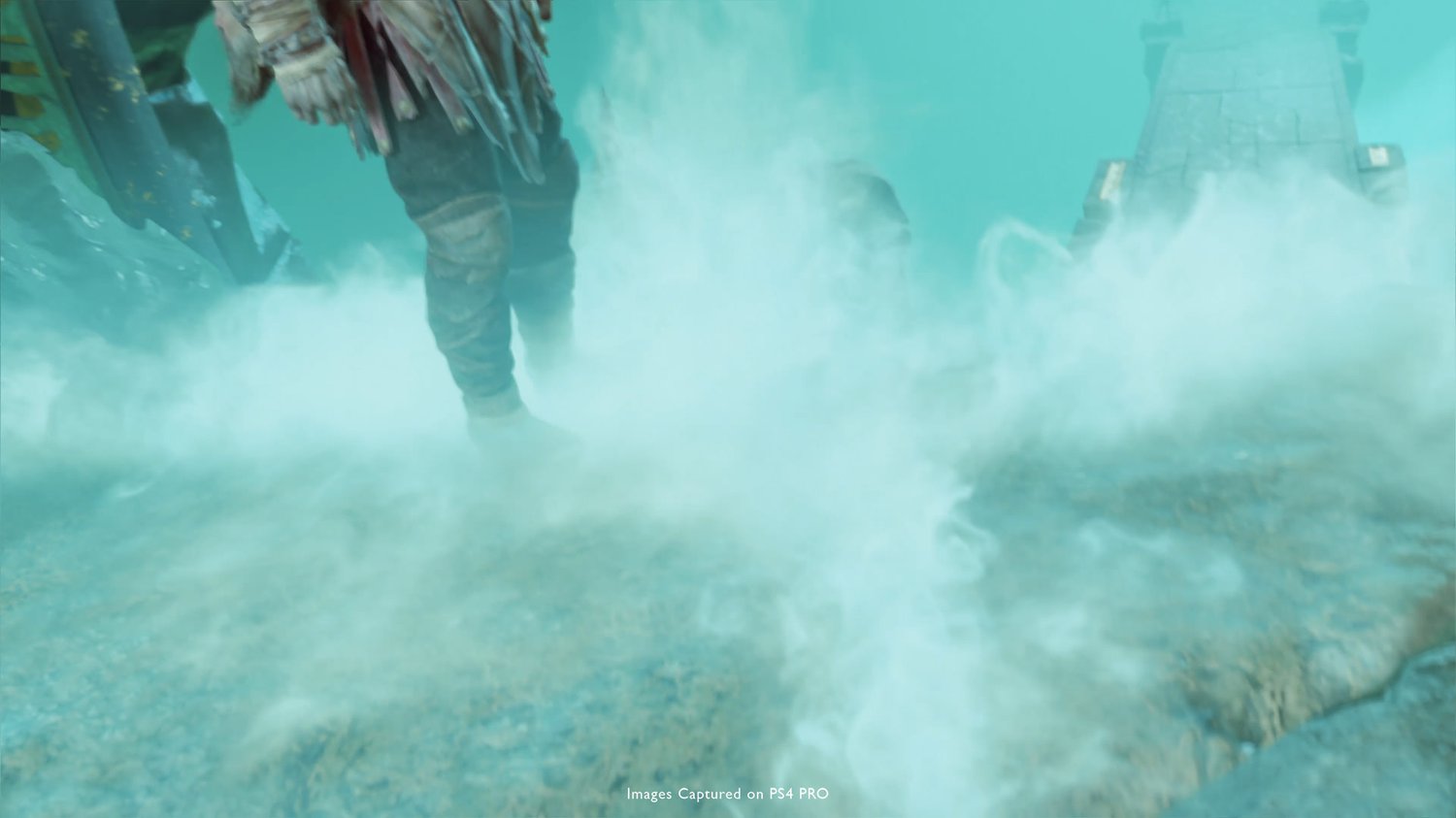
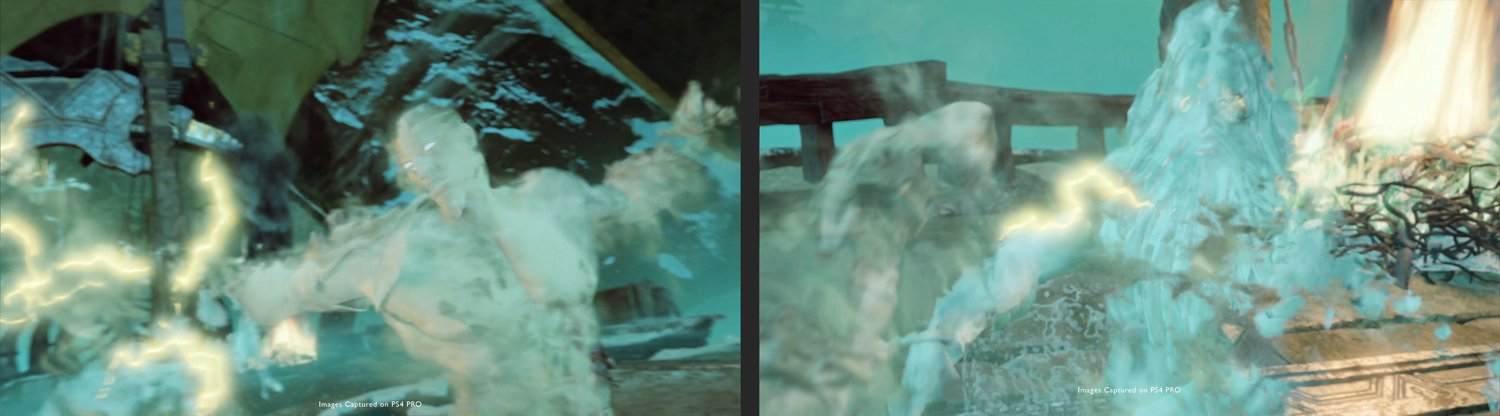
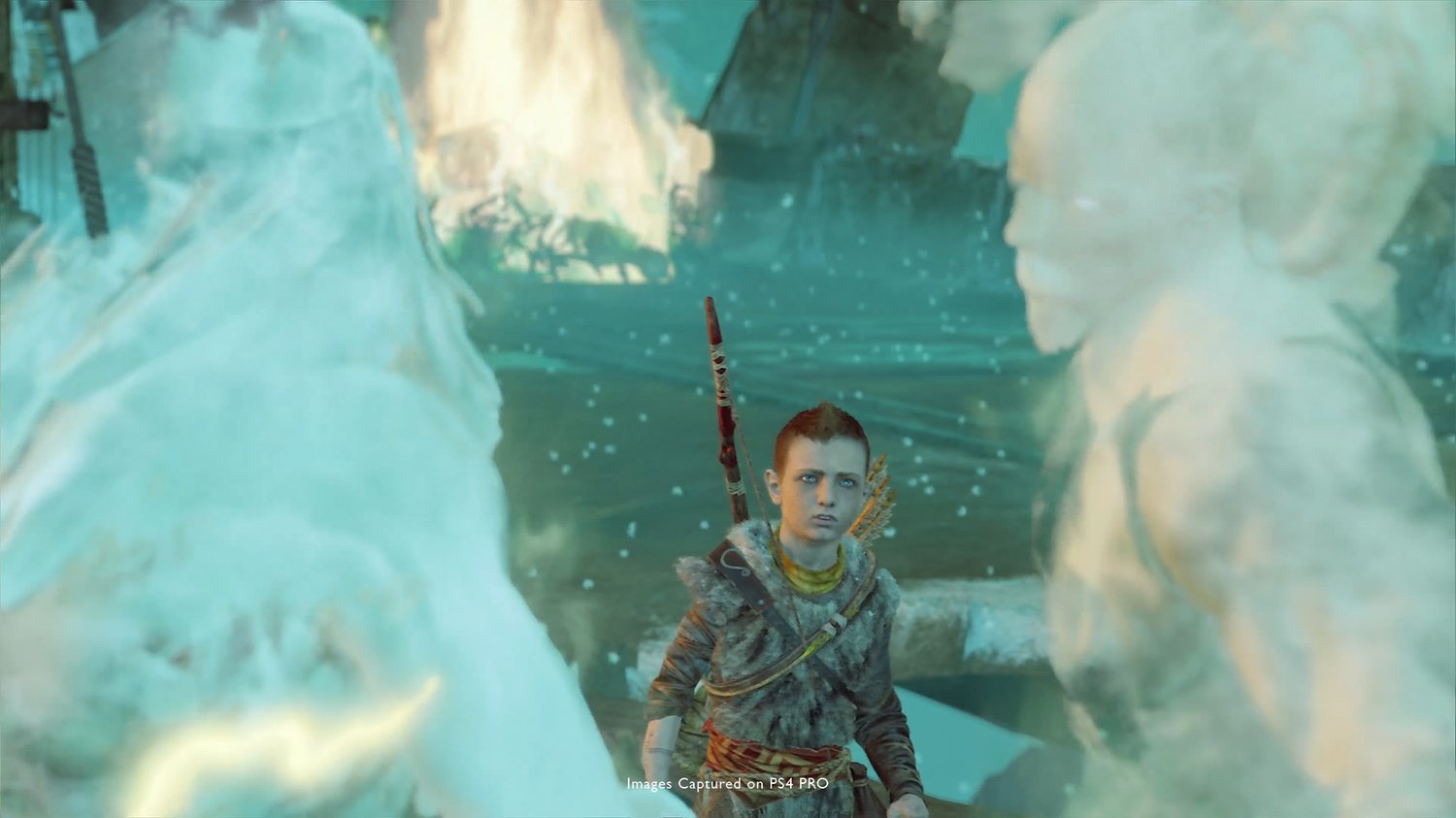
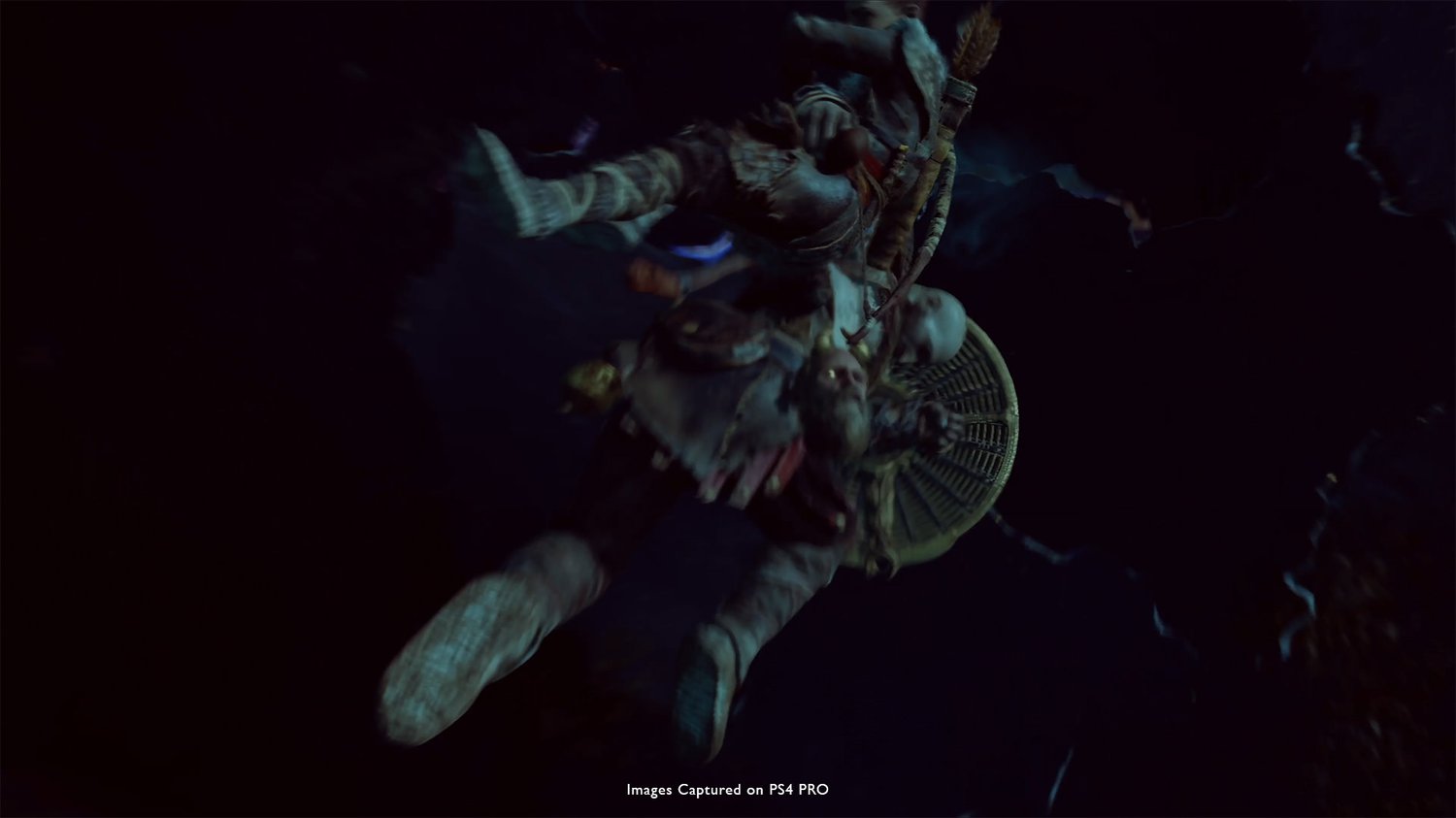
In this scene, Kratos is reliving a painful secret from his past: the moment he kills his father, Zeus. This display is part of Helheim’s mechanism to mentally torture its inhabitants. Kratos is hit by this vision two-fold; he is both internally struck by reliving it, and is shaken that his son is exposed to this part of his past, a part he has been struggling to hide from Atreus. On the other hand, Atreus himself is seeing his father, fully enraged and unrestrained for the first time — brutal, unbridled and violent. The challenge was how to do all the following without cutting the camera:
- Portray the brutality of the vision
- Portray Atreus’ reaction to seeing it
- Portray Kratos’ two-fold reaction to the event
- Bonus points: Portray it in a way that would evoke a sense of delirium, or being mentally off balance.
Ogre Intro
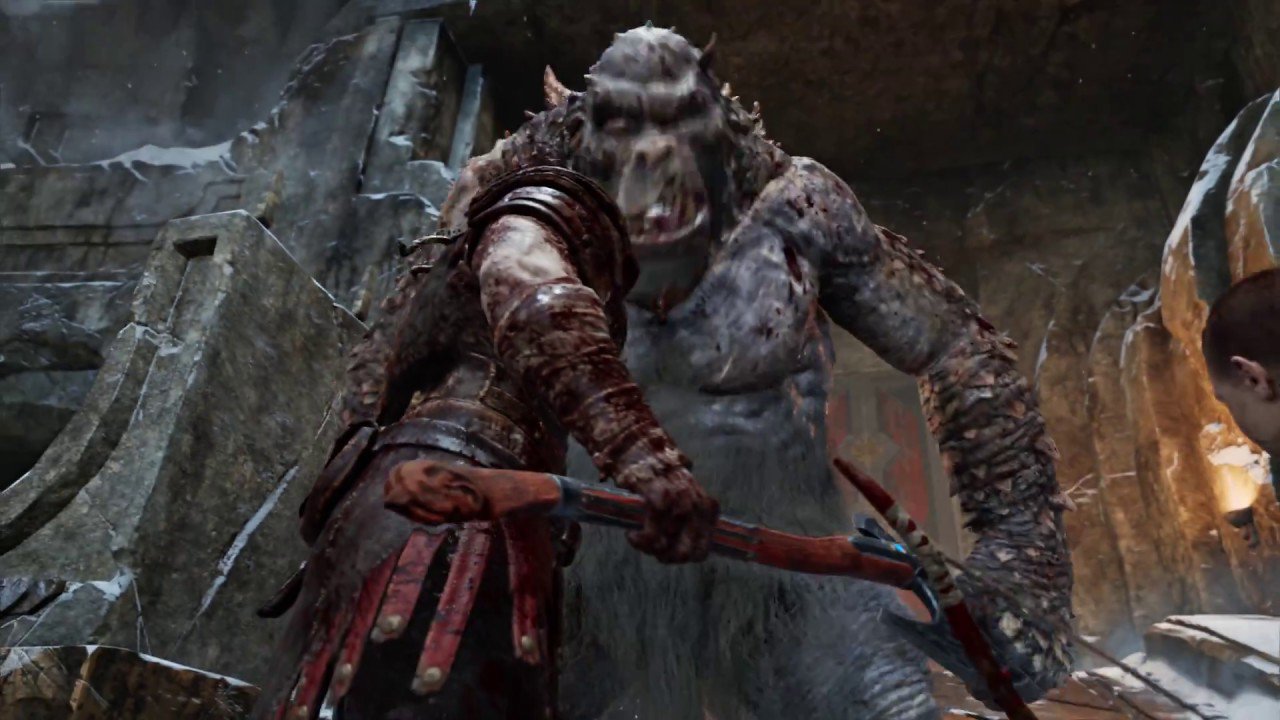
Cinematic Challenge: Motion capturing a high action, high physical interaction scene with characters of different scale.
The previous two challenges were more about defining our emotional, cinematic language and how to execute it without cuts in a real-time engine. This challenge was more technical and helped define our approach to action. It helped us define which tools we’d need on set, and how far we could push real-time performance capture for characters with vastly different scales.
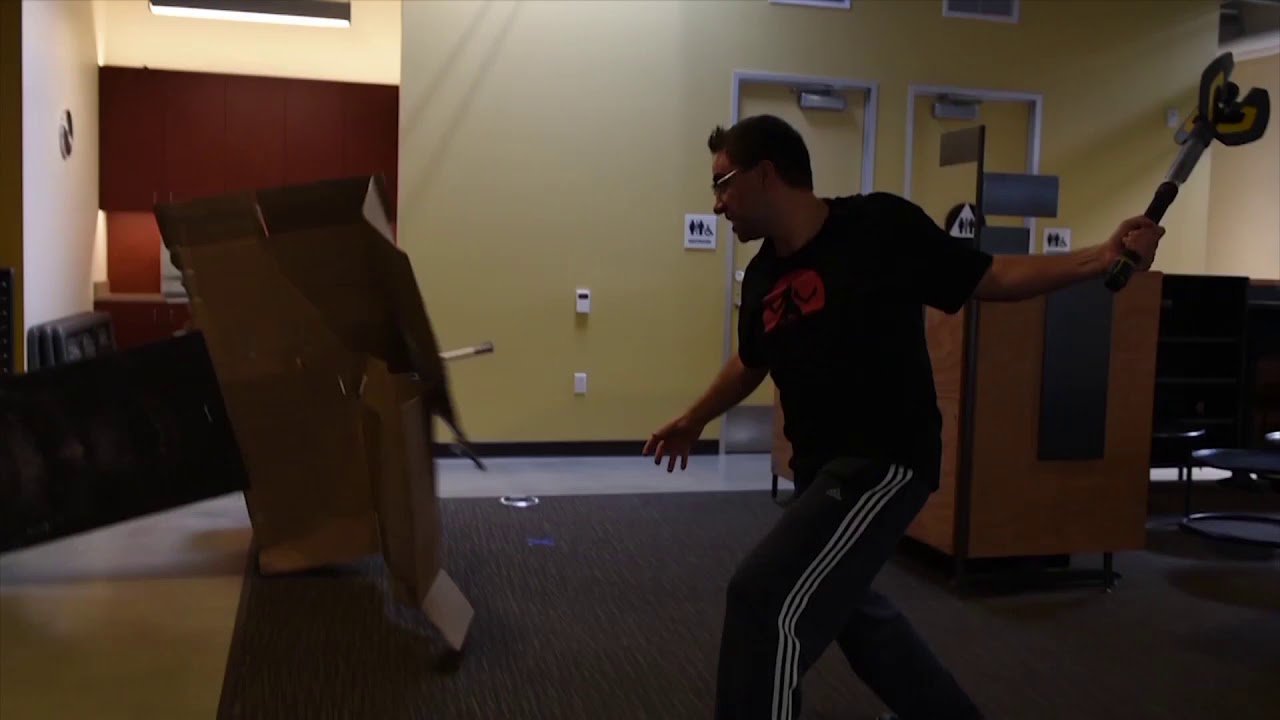
Once I’m done staging the scene on paper, we move to rehearsing the action in “real space.” This step was critical in order to test whether or not the paper breakdowns were actually achievable and also gave us a chance to see all the “players” involved internalize the choreography and pacing of the scene. It’s interesting to see how “slow and safe” we took things at first.
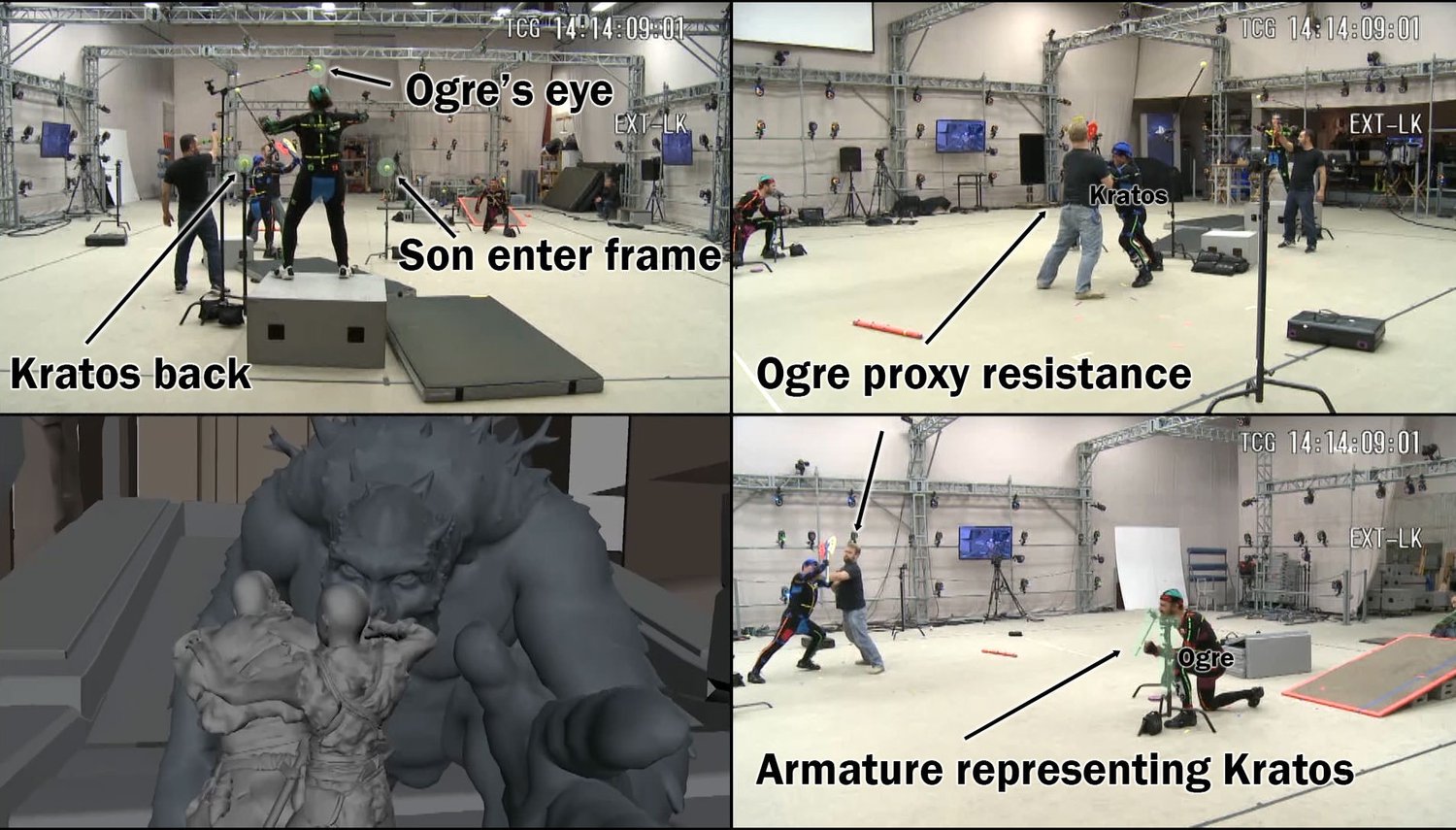
Our roles:
- Bruno (our Animation Director) played KratosErica ( our Cinematic Animation Lead) played Atreus
- Mehdi ( our In-Game Animation Lead) played the Ogre
- Myself (Director of Photography) Staging, pacing callouts and “shooting”
All action was in sync, actors physically responding to each other, even though they had no real world contact. A well-oiled execution, the pre-planning and rehearsals paid off in spades. Ability to shoot multi-scale, single shot action scenes in real time… check!
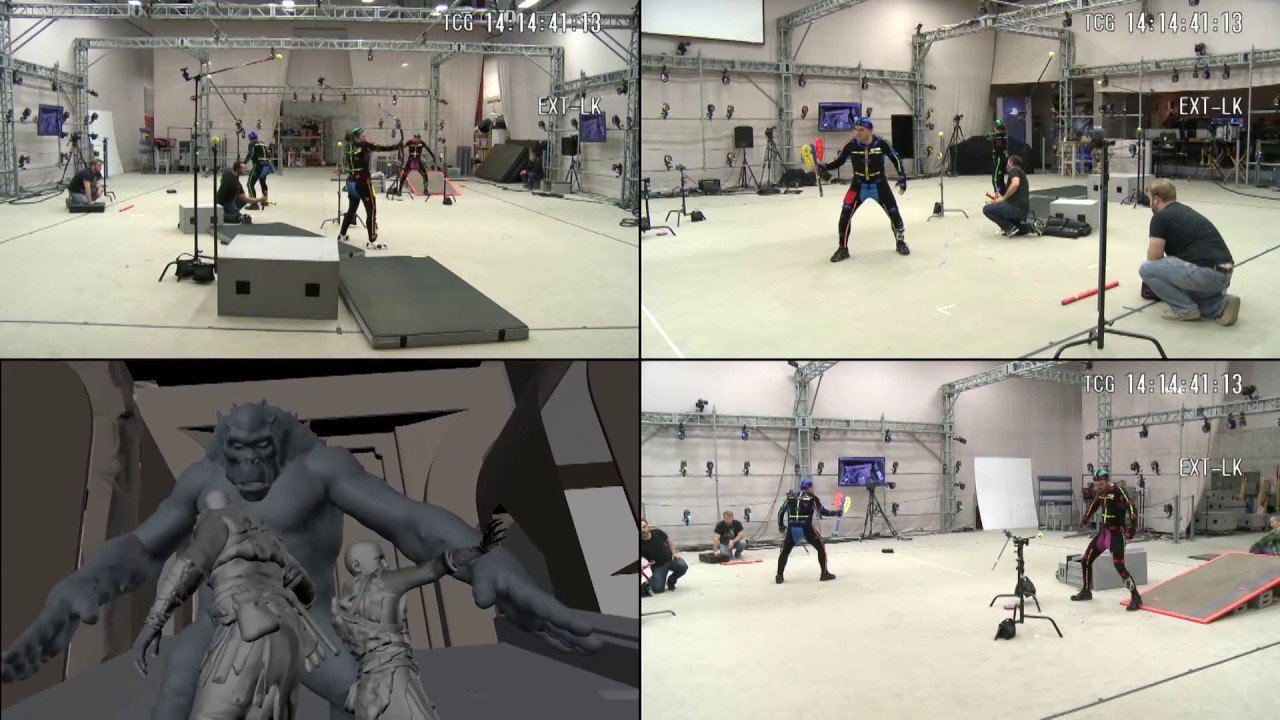
Going over these scenes, it’s incredible to see how far we’ve come. From exploring methods and ideas on how to execute Cory Barlog’s concept of a no-cut camera, to a clear, well-oiled, sophisticated and clearly defined visual language. At the risk of sounding cliché, it really does take a village.
-
Watch Raising Kratos
Raising Kratos is more than just a “making of,” this cinematic journey of second chances rooted in family, sacrifice, struggle and doubt follows game director Cory Barlog and those who chase perfection in art and storytelling. Witness the incredible defeats, the unpredictable outcomes and the down-to-the-wire tension on full display in this true-life redemption story.

-
Announcing Raising Kratos
On the one year anniversary of its release, we’re excited to share this peek behind the curtain of God of War’s very own Santa Monica Studio with a trailer for our upcoming film, Raising Kratos. This full-length feature documentary, coming very soon to PlayStation YouTube, is an exploration into the massive undertaking it took to change the course of the God of War Franchise.
-
Making History
"If you make something with passion, that passion is contagious." We partnered with Guinness World Records to surprise one of our greatest fans - Emmanuel Mojica Rosas. He is a fan for the ages, and this is a story we think you will never forget. Not to mention, we also reveal some incredible new merchandise from our dear friends at Mondo.
-
Thank You
Together we all dream big dreams. Dreaming big has led to an amazing sense of accomplishment for all of us here at Santa Monica Studio and it’s the belief in that dream that kept us going, from the very moment we set out to create a new beginning for God of War.





















LEGAL &
PRIVACY
CALIFORNIA
PRIVACY